War Crime: Al-Shabaab Hors de Combat Killing and Corpse Mutilation Near Baidoa — May 2026
Islamic Nasheed music edited out.
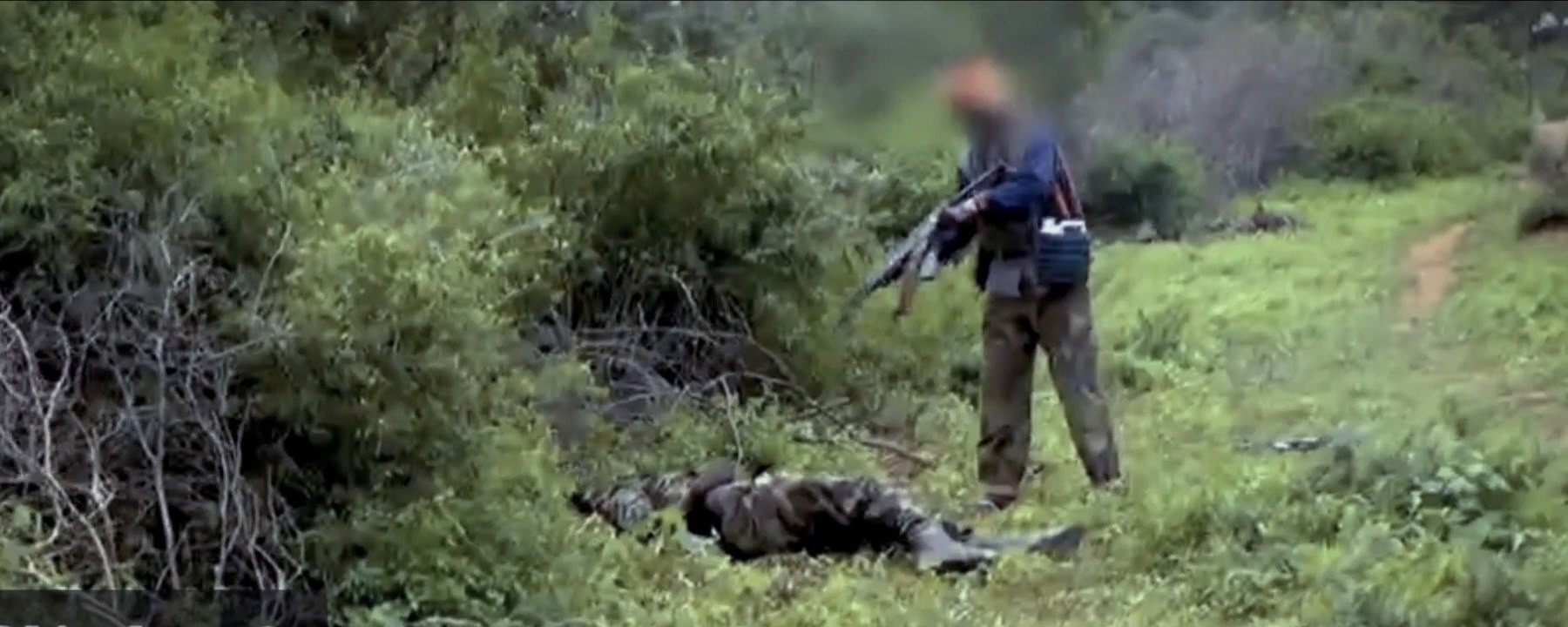
Footage released by Al-Shabaab’s media apparatus on or about 14 June 2026 documents the aftermath of the group’s 14 May 2026 ambush of a Somali National Army convoy on the outskirts of Baidoa, Bay region — an attack that killed senior officers of the SNA’s 60th Division, including two named brigade commanders, and produced filmed evidence of two distinct violations of the laws of war.
context
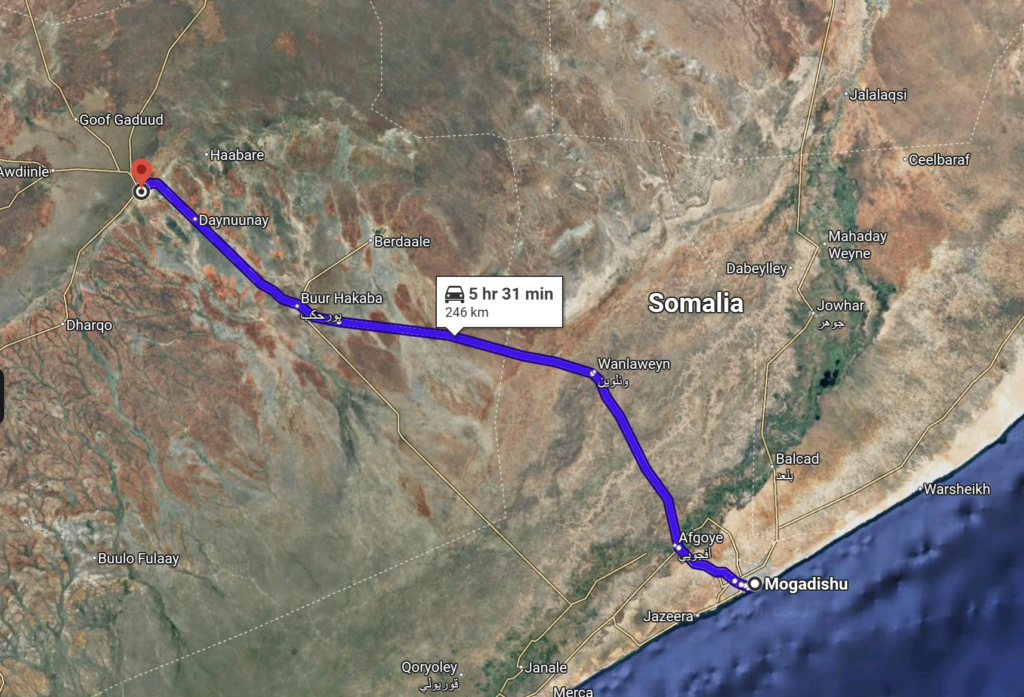
Baidoa was retaken by federal forces in March 2026, when more than 2,000 troops moved from Mogadishu along the 246-kilometre road in a heavily armoured convoy, backed by Turkish air power, a route federal forces had barely used in years.
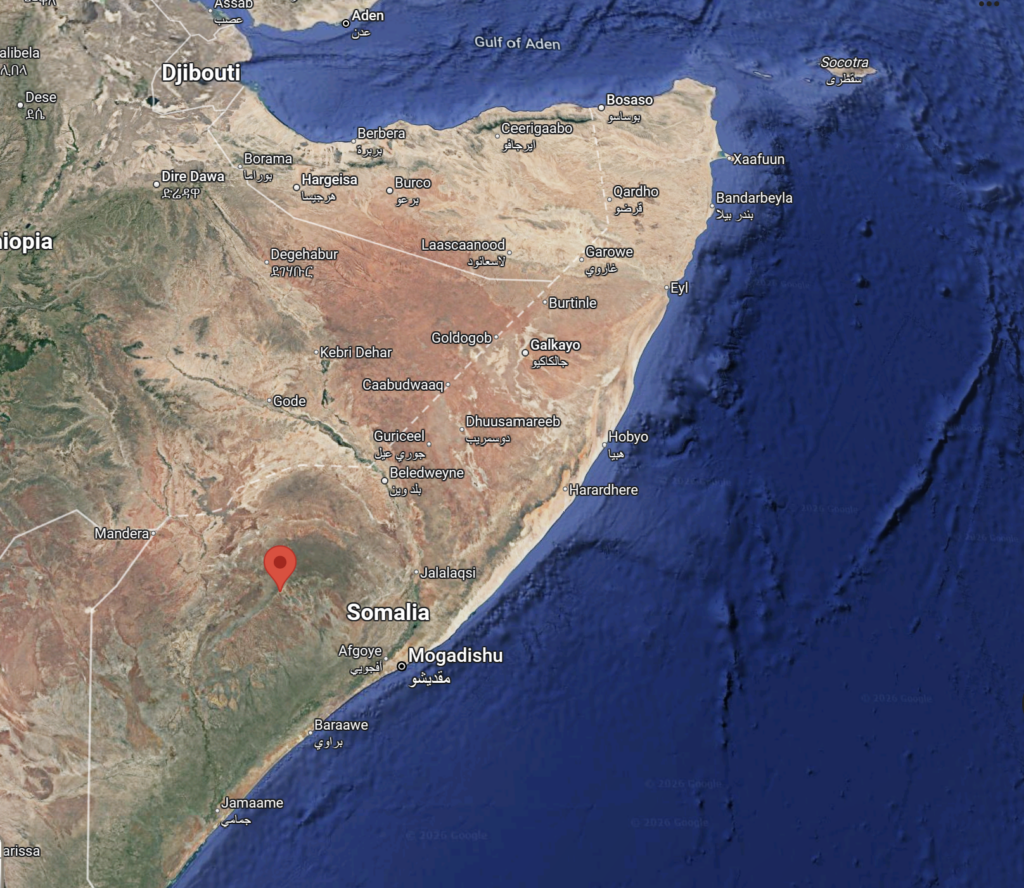
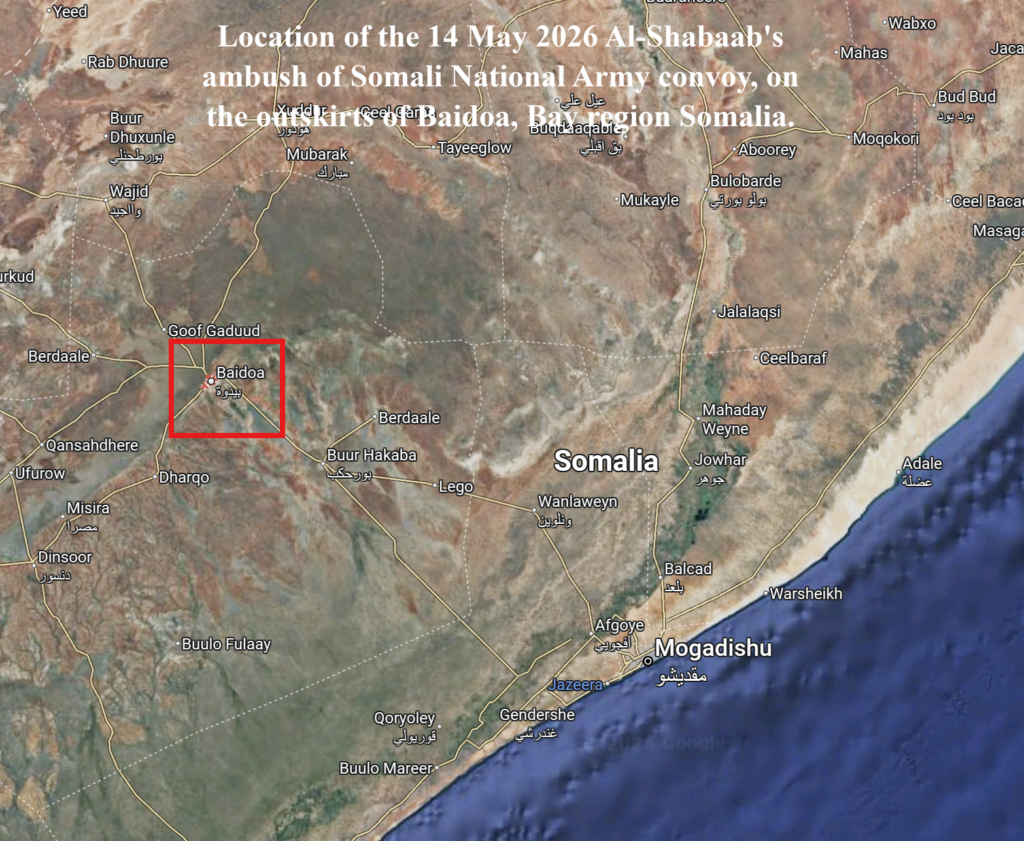
Control has not extended far past the city limits. The routes in and out remain contested, the Southwest State political crisis surrounding the removal of Abdiasis Laftagaren has pulled security forces in several directions at once, and Al-Shabaab has maintained a decade-long presence in the surrounding Bay countryside. On 14 May 2026, the group ambushed an SNA convoy travelling outside the city. The attack was claimed by Al-Shabaab and reported the same week by independent Somali media.
Islamic Nasheed music edited out.
the commanders
Gaashaanle Cali Cadow Maxamed commanded the 8th Brigade of the SNA’s 60th Division.
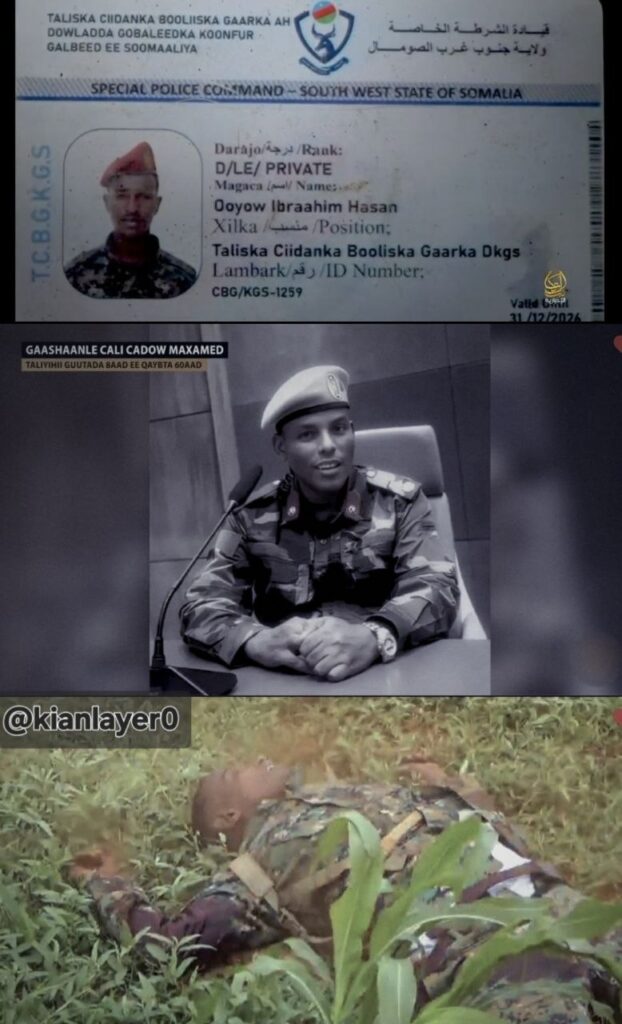
Gaashaanle Yoonis Aadan Xasan commanded the 9th Brigade.
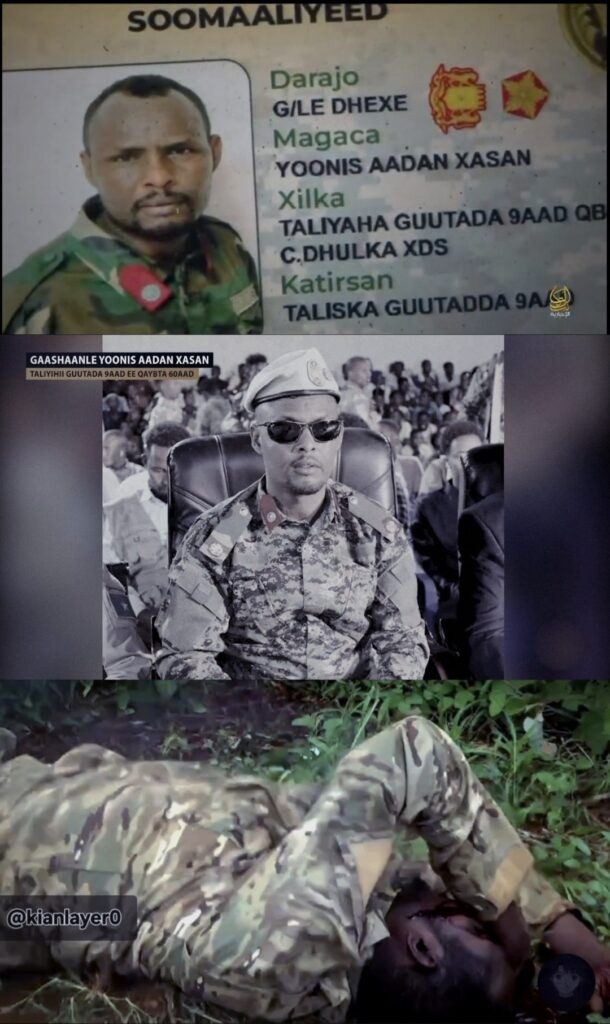
Both men appear in earlier official footage alive, in uniform, seated among their soldiers. Both are identified in Al-Shabaab’s own release, the group filmed and published the documentation of their deaths itself, including material confirming their ranks and commands. Contemporaneous reporting named both officers within a day of the ambush. The Federal Government of Somalia subsequently promoted both posthumously, formally recognising them alongside a third officer killed in the same period of fighting across Bay and Lower Jubba as Shahiid. They were named, ranked, serving officers of a national army. Their deaths are now part of the official record of their own government.
casualties, claimed vs documented
The footage documents multiple dead SNA personnel, with a conservative estimate being approximately 20, with Al-Shabaab’s contemporaneous public claim, as reported on 15 May, was 20 soldiers killed including three commanders, with four gun-mounted vehicles captured. Somali authorities issued no immediate formal casualty account. The two commanders’ identities are independently corroborated; the totals are presented here as claimed, not confirmed. Al-Shabaab’s contemporaneous public claim, as reported on 15 May, was 20 soldiers killed including three commanders, with four gun-mounted vehicles captured. Somali authorities issued no immediate formal casualty account. The two commanders’ identities are independently corroborated; the totals are presented here as claimed, not confirmed.
the legal threshold, what is and is not the crime
Precision matters here. The ambush itself is not a war crime. In a non-international armed conflict, soldiers are lawful military objectives, and an attack on a military convoy, however lethal, is combat. The violations documented in this footage begin at the moment resistance ends. I assess with high confidence that the footage documents two distinct, independently chargeable violations: the killing of personnel no longer capable of resistance, and the deliberate firing into their remains after death, an act of desecration, not a continuation of combat.
applicable law
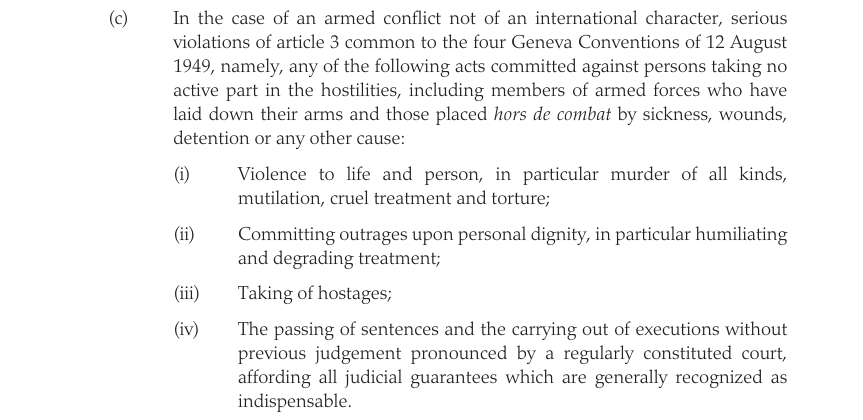
The applicable law is worth stating exactly, because Al-Shabaab is bound by less of it than is commonly assumed, and still violated what remains. Somalia has been party to the four Geneva Conventions since 1962 but never ratified Additional Protocol II. The treaty law governing this conflict is therefore Common Article 3, which binds every party to a non-international armed conflict, states and organised armed groups alike, regardless of whether the group recognises it together with customary international humanitarian law as catalogued by the ICRC. The Rome Statute’s Article 8(2)(c) criminalises serious violations of Common Article 3: acts committed against “persons taking no active part in the hostilities, including members of armed forces who have laid down their arms and those placed hors de combat by sickness, wounds, detention or any other cause.”
murder of persons hors de combat
Murder of persons hors de combat, Article 8(2)(c)(i). The ICC’s Elements of Crimes sets out this offence in five elements: the perpetrator killed one or more persons; the victims were hors de combat or otherwise taking no active part in hostilities; the perpetrator was aware of the factual circumstances establishing that status; the conduct took place in the context of a non-international armed conflict; and the perpetrator was aware of the circumstances establishing that conflict. Every element is met on the face of the footage. Under customary Rule 47, a person is hors de combat if defenceless because of wounds, no formal surrender is required. The perpetrators film the incapacitated at close range, narrating; their awareness of status is recorded in their own commentary. The nexus is supplied by the ambush itself, which Al-Shabaab claimed as its own military operation. Customary Rules 87 and 89 state the same obligations in plainer words: persons hors de combat must be treated humanely; murder is prohibited.
mutilation of the dead
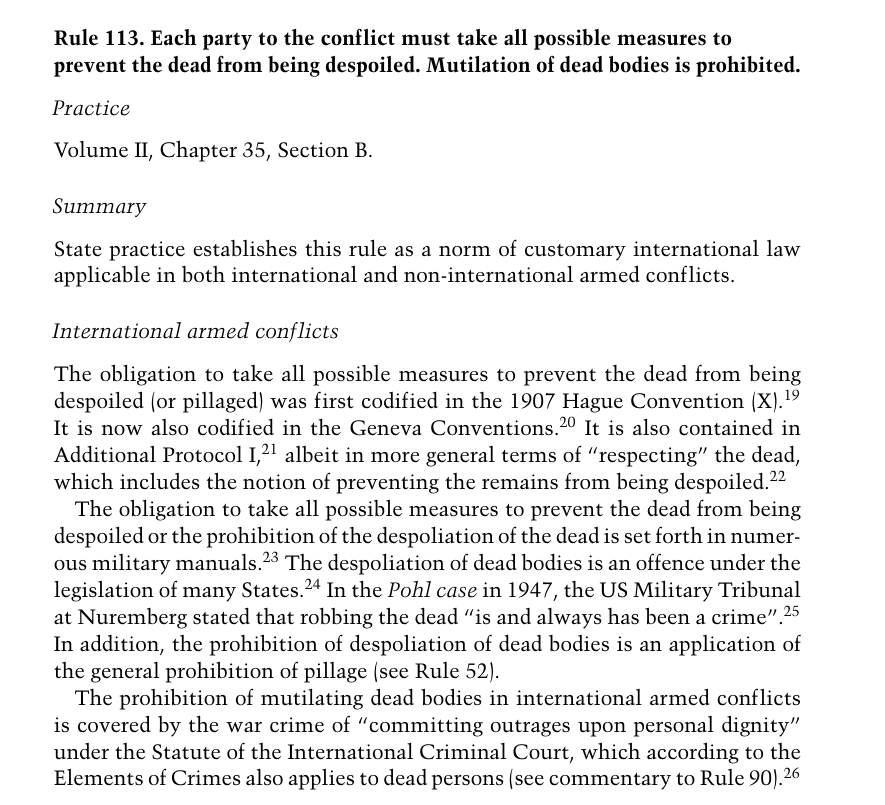
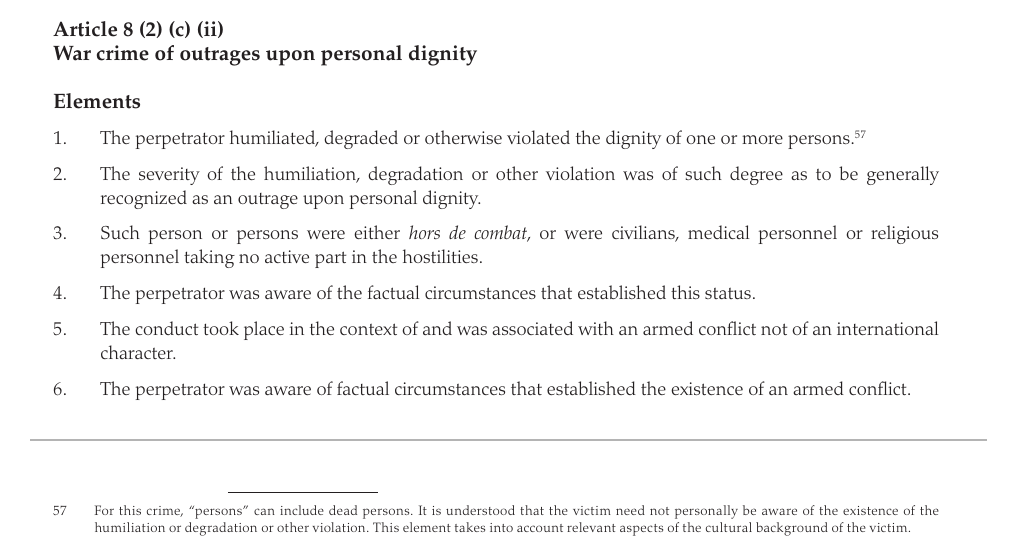
Mutilation of the dead, Rule 113 and Article 8(2)(c)(ii). ICRC Customary IHL Rule 113: “Each party to the conflict must take all possible measures to prevent the dead from being despoiled. Mutilation of dead bodies is prohibited.” State practice establishes this as customary law in international and non-international armed conflicts alike. And it is not an orphan rule without a criminal charge attached. The ICC’s Elements of Crimes, footnote 57 to Article 8(2)(c)(ii), outrages upon personal dignity, states: “For this crime, ‘persons’ can include dead persons. It is understood that the victim need not personally be aware of the existence of the humiliation or degradation or other violation.” The ICRC study itself draws the connection, noting that the prohibition of mutilating dead bodies “is covered by the war crime of committing outrages upon personal dignity” under the ICC Statute. Firing into remains after death, filmed and distributed as proof of the kill, is separately chargeable, distinct from the killing, with its own elements, met here on the group’s own footage.
precedent
There is direct precedent for prosecuting exactly this evidentiary posture. In August 2017 the ICC issued its first arrest warrant grounded in social-media video: Mahmoud al-Werfalli of the Libyan Al-Saiqa Brigade, charged with murder as a war crime under Article 8(2)(c)(i) on the basis of seven filmed execution incidents involving 33 victims, footage substantially produced and circulated by the brigade’s own media centre. A second warrant followed in July 2018 after he filmed another. The perpetrating organisation published the evidence itself; the Court charged on it. European courts have gone further on the desecration charge specifically: Germany’s Federal Court of Justice held in July 2017 that desecration of the dead is prosecutable as the war crime of outrages upon personal dignity, and prosecutors in Germany, Finland and Sweden have since convicted returned fighters on precisely this class of perpetrator-circulated footage under universal jurisdiction.
jurisdiction, stated honestly
Somalia is not a State Party to the Rome Statute, it has neither signed nor ratified, and a parliamentary accession bill was rejected on procedural grounds in January 2024. ICC jurisdiction over these acts would require a Security Council referral under Article 13(b) or an Article 12(3) declaration by Mogadishu. That does not park this documentation. Somali military courts actively prosecute Al-Shabaab members. Universal jurisdiction statutes in third states have already produced convictions for both charges documented here. And the evidentiary standard is set now, at the point of capture, not later: the original footage is preserved unedited, hash-verified, with chain-of-custody records, against the day a jurisdictional pathway opens.
Islamic law, standing orders
Under Islamic law the same conduct is condemned on its own terms, not by inference or modern reinterpretation, but by the Prophet’s ﷺ standing instruction to every commander he appointed. Sahih Muslim, Book of Jihad and Expeditions (1731): “Fight in the Name of Allah, for the sake of Allah… do not steal from the war booty, do not break your promises, do not mutilate (the dead enemy) and do not kill children.” The same instruction is preserved in Bulugh al-Maram, the Shafi’i jurist Ibn Hajar al-‘Asqalani’s compilation of legal hadith (Book of Jihad, no. 1089 in the Darussalam edition), and in Sahih al-Bukhari (2474), where the Prophet ﷺ “forbade robbery… and also forbade mutilation of bodies.” Muthla, the mutilation of a corpse, is prohibited by the most authenticated layer of the tradition Al-Shabaab claims to defend.
Islamic law, Uhud
The prohibition was sealed at the moment of maximum provocation. At Uhud, the body of the Prophet’s ﷺ own uncle Hamza was mutilated, and Muslims vowed reprisal in kind. The Qur’anic answer was 16:126: “And if ye punish, let your punishment be proportionate to the wrong that has been done to you: but if ye show patience, that is indeed the best (course) for those who are patient.” According to the majority of exegetes and jurists, the Prophet ﷺ thereafter prohibited mutilation outright. If reprisal mutilation was forbidden even for Hamza, there is no argument available to a media unit in the Bay countryside.
Islamic law, Abu Bakr
The first caliph made the prohibition a matter of public doctrine. When the severed head of an enemy commander was brought to Abu Bakr and justified as reciprocity, the enemy had done the same to Muslims, he rebuked the act: “Are we going to follow the Persians and the Romans? We have what is enough: the Book and the reports.” He then publicly ruled the practice sunnat al-‘ajam, the practice of the foreigners, alien to Islam by definition. To his governor in Hadramaut he wrote separately: “Beware of mutilation, because it is a sin and a disgusting act.” The ruling is categorical and self-binding: Islamic law’s constraints do not lapse because of the enemy’s conduct. An organisation that films the desecration of the dead and distributes it as a trophy is practising, on the first caliph’s own classification, the custom of the foreigners.
Islamic law, hors de combat in fiqh
Classical fiqh also protects the incapacitated. Even in war against non-Muslims, the wounded and captured may not be summarily finished; the Qur’an directs that captives be held “thereafter (is the time for) either generosity or ransom” (47:4). And in fighting between Muslims, the only classical category even arguably available to Al-Shabaab, whose victims here are Muslim soldiers of a Muslim army, the rule is stricter still. Al-Shafi’i derived the rules for intra-Muslim armed conflict from the precedent of Ali ibn Abi Talib: the fleeing are not pursued, and those rendered hors de combat, wounded or captured, cannot be killed. The classical Shafi’i and Hanbali position states the protection in precisely the terms international law uses today. Whichever legal category Al-Shabaab claims for its war, the conduct in this footage is haram within it.
Islamic law, Khawarij
The Somali government’s standing designation of Al-Shabaab as Khawarij is drawn from this same classical tradition, and it is not rhetorical invention. The classical jurists distinguished rebels, who fight only the ruler and his army, from the Khawarij, who indiscriminately attack all Muslims. The Prophet’s ﷺ description of them, recorded in Sahih al-Bukhari: “they will kill the Muslims and leave the idolaters.” An organisation that kills Muslim soldiers after incapacitation, desecrates their bodies, and distributes the film as proof is not being libelled by the designation; it is furnishing the evidence for it. This is also the category of conduct rival Salafi-jihadist factions have used against one another to level takfīr accusations. Al-Shabaab’s exposure here is not only legal. It is doctrinal, and it originates from within the tradition the group claims to represent.
convergence
On the treatment of the dead, the two legal systems do not merely overlap, they converge to the point of identity, a convergence documented by the ICRC’s own legal adviser on Islamic law, Ahmed Al-Dawoody, whose study of the classical sources concludes that the jurists’ position on the enemy dead is in agreement with Article 17 of the First Geneva Convention. Ibn Hazm went further: leaving the enemy dead unburied is itself tantamount to prohibited mutilation. Islamic law does not stop where Rule 113 stops; it obliges the burial that the customary rule encourages. Al-Shabaab did not fall short of some alien Western standard near Baidoa. It fell short of both systems, and of the stricter one first.
a documented pattern
This incident is consistent with patterns of organised violence against incapacitated and captured personnel documented across multiple theatres, including the hors de combat killing of a Burkinabe soldier by JNIM insurgents in April 2026 the execution of four Malian FAMa soldiers by JNIM or ALF separatists, the Extrajudicial Execution and Public Display of Combatant in Kidal, Mali, the burning and dismembering the body of a claimed JNIM insurgent and systematic atrocity campaign documented in El Fasher, North Darfur. The broader atrocity campaign in East Africa and the Sahel is documented in ongoing coverage across this archive.
supplemental footage of the assault and war crimes
Islamic Nasheed music edited out.
Islamic Nasheed music edited out.
source credibility
Source credibility assessed as high on the core facts. The footage is self-published by the perpetrating organisation. The deaths and identities of the two named commanders are corroborated by two independent legs: Somali state media reporting on their posthumous promotions, and contemporaneous independent reporting within a day of the ambush (Somali Guardian, 15 May 2026). Casualty totals and vehicle losses are drawn from Al-Shabaab’s own claim and are presented as assessed, not independently confirmed. Chronology: attack 14 May 2026; footage released on or about 14 June 2026, per file metadata. Original footage preserved unedited with hash verification and chain-of-custody records; available to OHCHR, UN accountability mechanisms, or credentialed researchers upon verified request, and held to evidentiary standards should an ICC pathway open.
kianlayer0 (Kian Tveitan) OSINT conflict reporter documenting war crimes in East Africa and the Sahel to international evidentiary standards.